
Buying a villa in Bali can be exciting, but listing photographs do not necessarily show the condition you will inherit. Fresh paint and attractive landscaping can create a strong first impression while defects remain elsewhere. Some are minor maintenance items; others affect safety or require substantial repairs.
A careful inspection does not label a villa “good” or “bad.” It helps you understand the building’s visible condition so you can budget for repairs, request work, negotiate or reconsider the purchase.
This Bali villa inspection checklist covers the principal areas buyers should consider. It is useful during an initial viewing, but it is not a substitute for an independent home and villa inspection in Bali.
1. Start Outside the Villa
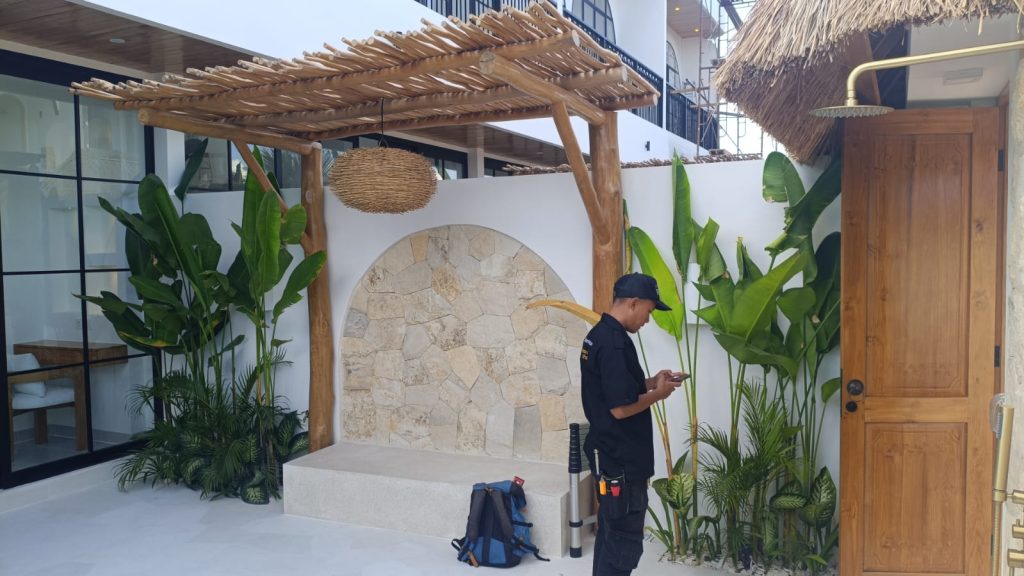
Many expensive property problems begin outside. Walk around the entire building where access permits and look at how the villa interacts with the surrounding land.
Check whether the ground slopes toward or away from the building. Soil, paving and garden beds that direct water toward exterior walls can contribute to ponding and moisture intrusion. Drains should be low enough to collect water and clear of soil, leaves and debris. Downspouts should not discharge beside the foundation.
Inspect exterior walls for cracking, peeling or blistered paint, damaged finishes, open penetrations and failed sealant around pipes, conduits, windows and doors. Vegetation growing against the building can retain moisture and conceal defects. On hillside properties, pay particular attention to retaining walls, drainage paths and evidence of movement or erosion.
Salt exposure can accelerate corrosion near the coast, while hillside sites require greater attention to grading, retaining structures and drainage. Our guide to inspection locations across Bali explains why environment matters.
2. Examine the Roof and Rainwater System
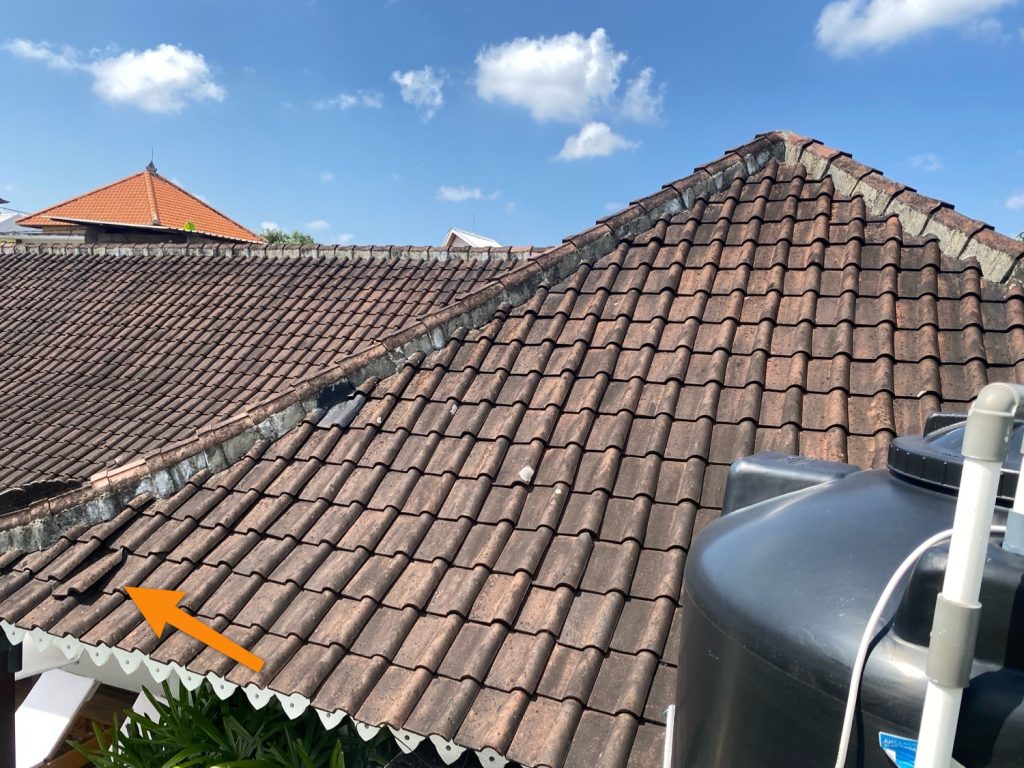
The roof is one of the most important and difficult areas to evaluate. Bali villas use clay or concrete tile, asphalt shingles, metal, sirap, alang-alang and waterproofed flat concrete roofs. Each has different failure points. Learn more in our guide to roof types commonly found in Bali.
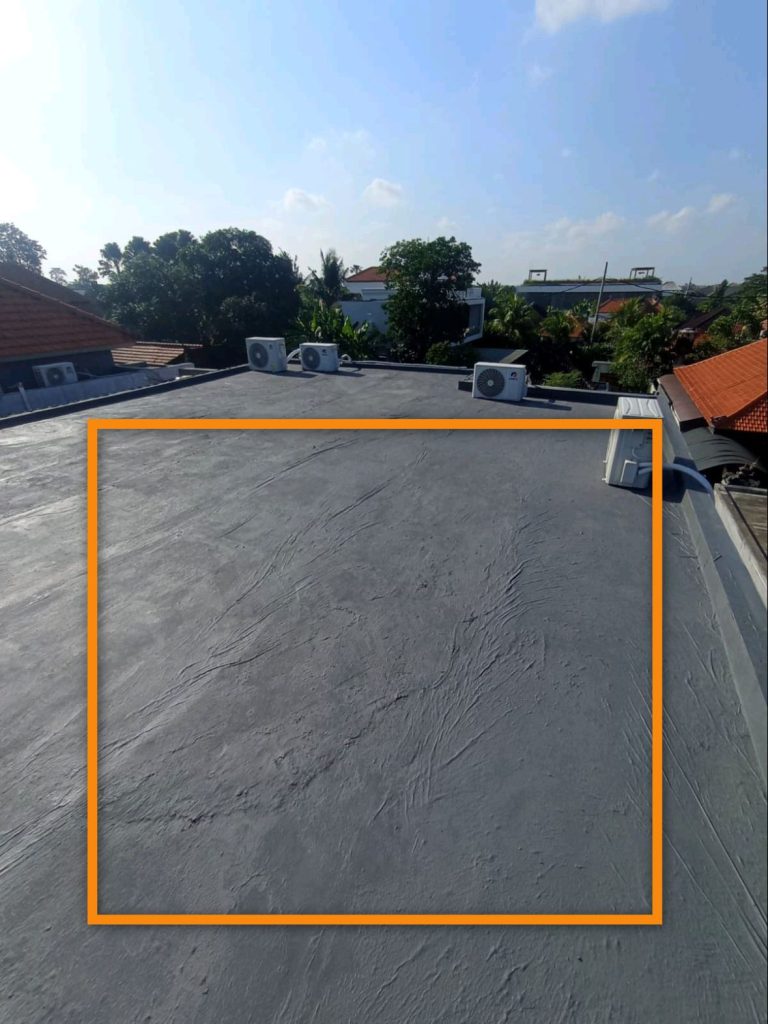
Look for damaged or missing coverings, corrosion, uneven roof lines, failed flashing and deterioration to visible roof components. Flat roofs need adequate slope and clear drains; ponding, cracking and failed waterproofing can lead to leaks. Flat roofs are often the most difficult to check because many of the new homes in Bali which use flat roofs do not have access to check. Often you would need scaffolding or a very tall ladder. This is one area where a home inspection can help. We have ladders and drones to check inaccessible roofs.
Inside the villa, check ceilings and upper walls for stains, blistering paint or past patching. A dry stain does not necessarily mean the cause was repaired. Ask when the roof was installed, what maintenance has been performed, whether leaks have occurred and whether the seller can provide warranties or repair records.
Roof access may be unsafe or restricted. Where appropriate and permitted, we use zoom photography or drone footage to assess difficult areas.
3. Look for Moisture Intrusion
Moisture is one of the most frequent concerns in Bali properties. Heavy rainfall, high humidity, poor drainage, roof leaks, failed waterproofing and plumbing leaks can all produce similar visible symptoms, but the correct repair depends on identifying the likely source.
Look for musty odours, discoloration, mold-like growth, swollen timber, peeling paint, white deposits and staining around ceilings, bathrooms, windows and exterior walls. Damage near floor level may be associated with rising damp, but appearance alone does not prove the cause.
Ask why isolated walls or ceilings were recently repainted and whether records or earlier photographs are available.
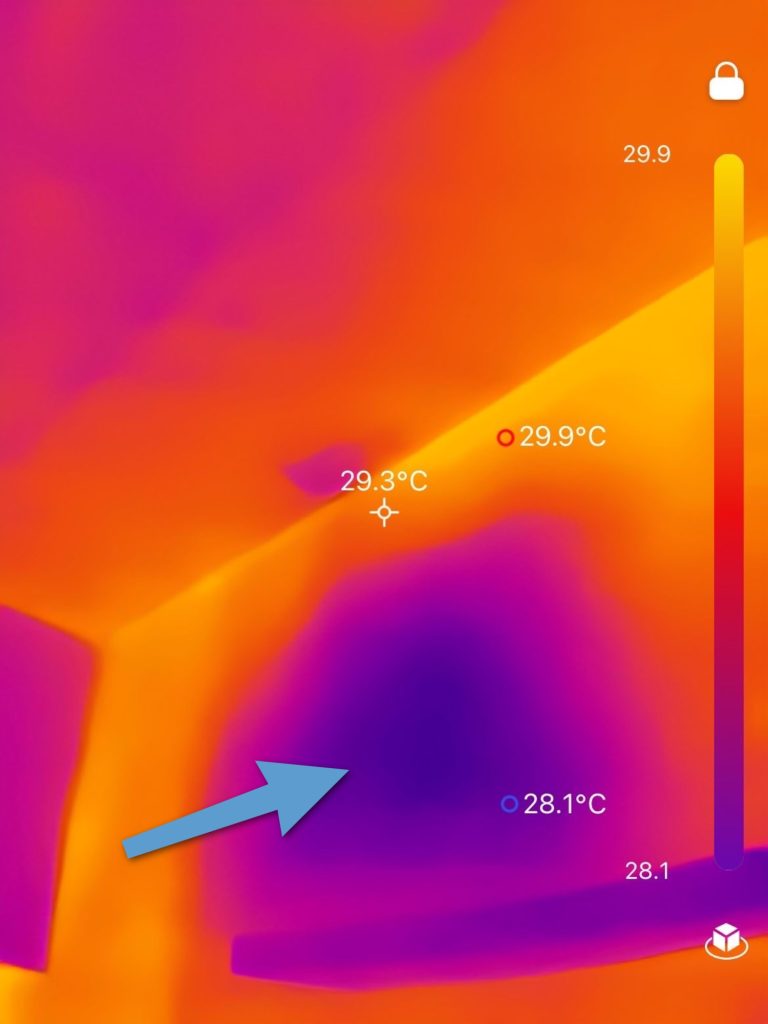
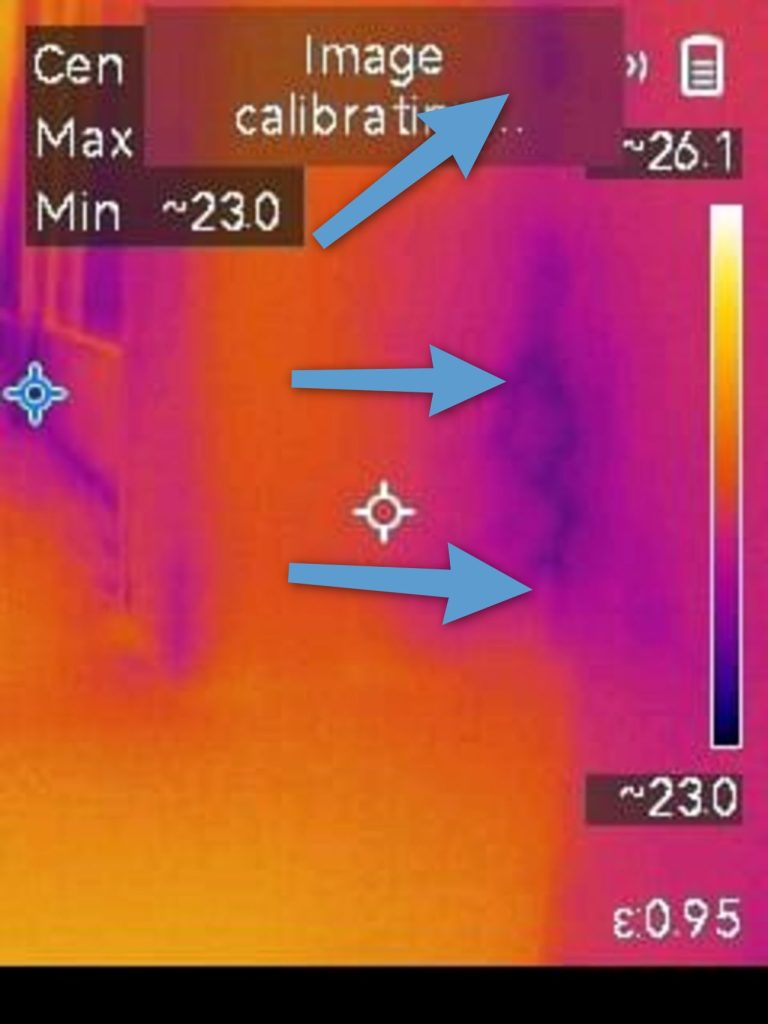
Our inspections may use moisture meters and thermal imaging to investigate suspicious areas. Thermal imaging can reveal temperature differences that warrant further testing, but it does not see through walls and does not prove that moisture is present by itself. Read more about thermal imaging during Bali home inspections and protecting a Bali home from leaks and moisture.
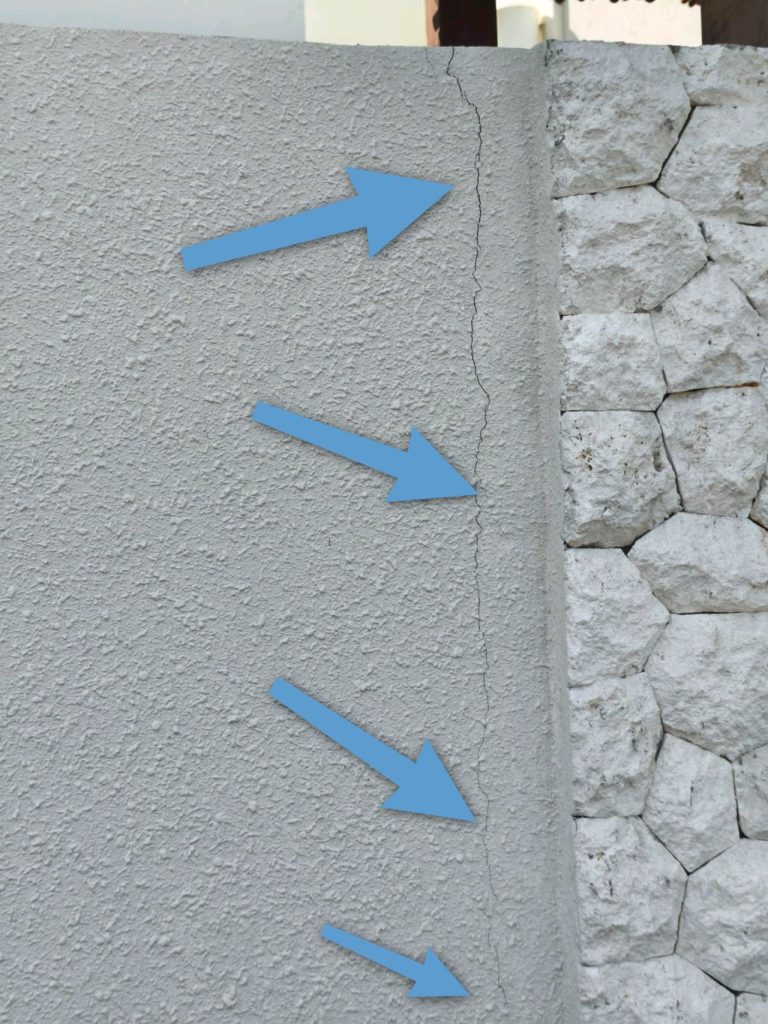
4. Check Walls, Columns and Other Visible Structural Elements
Cracks are common, but they should not all be treated as equal. Fine surface cracking may be limited to plaster, render or normal material shrinkage. Wider, deeper, recurring or patterned cracking may require closer evaluation, especially when accompanied by uneven floors, separation at wall junctions, sticking doors, visible deflection or movement in a retaining wall. A structural engineer is most help in this situation, home inspectors are also trained to look for what cracks require further investigation or testing. We have both on our team.
Look at columns, beams, walls, floor slabs, balconies, decks and roof supports where visible. Watch for exposed or corroding reinforcement, damaged concrete, timber decay, deflection, makeshift alterations and sections removed to accommodate plumbing or other services.
A standard inspection is visual and non-invasive, not a structural engineering calculation. Potentially significant movement or damage should be evaluated by a qualified building or structural engineer.
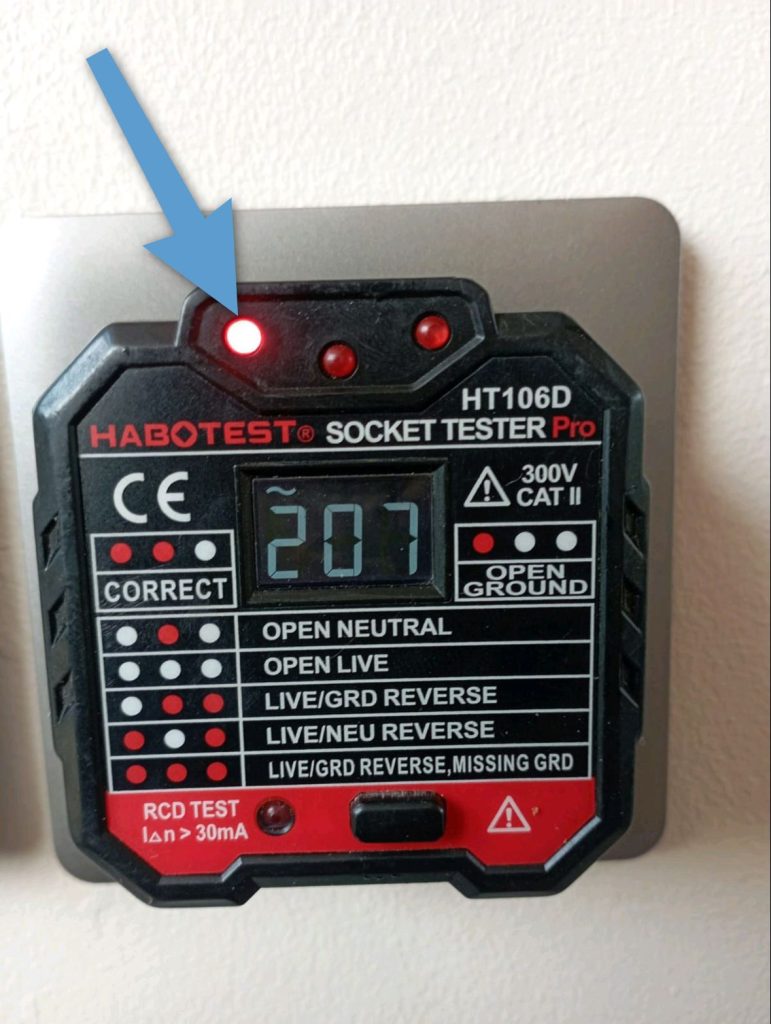
5. Check the Electrical Installation
Electrical defects may not affect the appearance of a villa, but they can create serious safety concerns. Do not assume a recently completed or renovated villa has been installed correctly.
Operate accessible lights, switches and sockets. Look for damaged outlets, loose fittings, exposed wiring, open splices, missing junction-box covers, unsuitable outdoor cables and signs of overheating or corrosion. Exterior and wet-area electrical equipment should be suitably protected from moisture. Listen for hissing or strange noises from the sockets or light switches that may indicate a poor connection behind the affected area.
The electrical panel should be accessible, covered internally and free of moisture entry, heavy corrosion or heat damage. Conductors should be properly terminated. Protective devices such as an ELCB or RCD would ideally be present, and socket grounding verified rather than assumed.
Do not remove panel covers or touch exposed components yourself. A qualified electrician should evaluate and repair specialist defects or a home inspector can within reason also check.
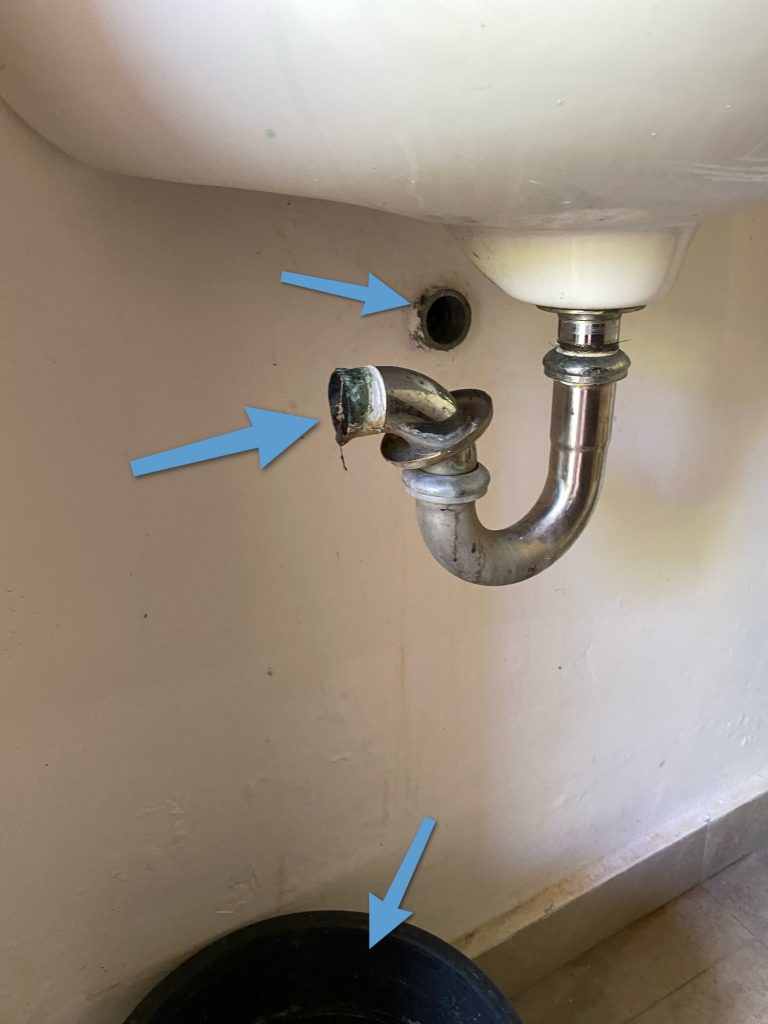
6. Run the Plumbing and Assess the Water System
Open taps and showers, flush toilets and observe whether fixtures drain normally. Check water pressure with more than one fixture operating, particularly in larger or multi-storey villas. Look below sinks, around toilets, behind accessible appliances and near water heaters for leakage, corrosion or improvised connections.
Ask whether the villa uses PDAM, a well, a storage tank or a combination. Find out whether supply changes during the dry season. Pumps should not leak, cycle continuously or make unusual sounds.
Many Bali villas use separate well, transfer, booster and pool pumps. Our guide to water pumps used in Bali villas explains what these pumps do and why correct sizing matters.
Check drainage speed, odours and visible wastewater arrangements. A visual inspection cannot confirm concealed pipes or the full septic system, so recurring blockages or leaks may require specialist testing.
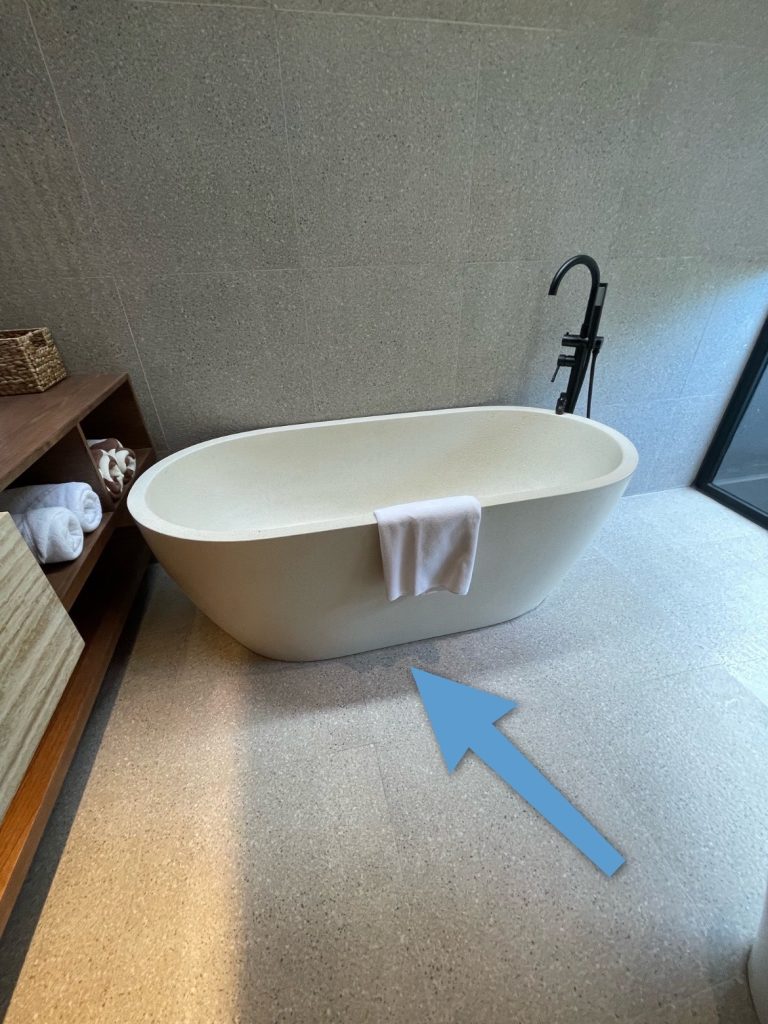
7. Inspect Bathrooms, Balconies and Other Wet Areas
Bathrooms, balconies, flat roofs and pool surrounds regularly expose workmanship problems. Check whether water flows toward drains rather than collecting against walls, doors or fixtures. Poor falls can leave permanent ponding and increase the chance of moisture intrusion.
Look for loose toilets, taps and shower fittings; deteriorated sealant; cracked grout; hollow or damaged tiles; leaks below vanities; and staining on ceilings beneath upper-floor bathrooms. Bathtubs should feel stable. Shower screens and glass guards should be secure, and safety glass should have permanent identification where expected.
Waterproofing is normally concealed after construction. For a new villa, request specifications, construction photographs, test records and written warranty information.
8. Check Doors, Windows, Floors and Finishes
Open and close accessible doors and windows. They should operate without excessive force, latch properly and not show unexplained misalignment. Gaps, failed sealant and poor exterior detailing can admit wind-driven rain, pests and humid air.
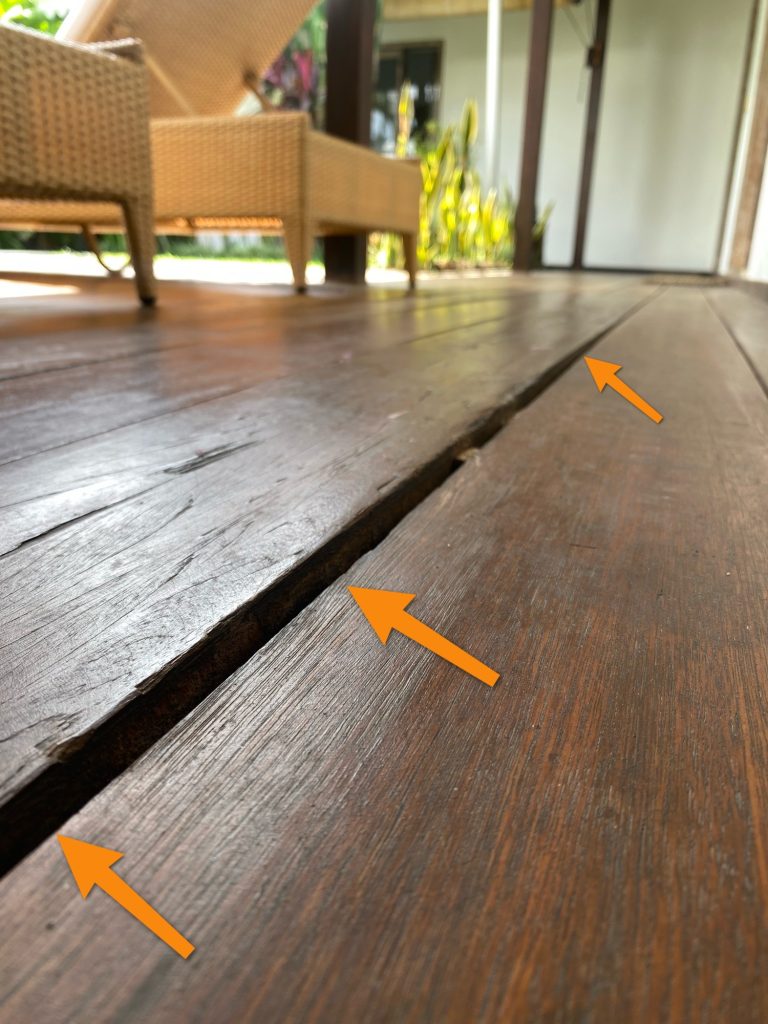
Walk the floors and look for cracked, chipped, loose, uneven or hollow-sounding tiles. Inspect cabinetry, countertops, stairs, railings, decks and built-in furniture for movement, damage and incomplete workmanship. Cosmetic defects may not be major individually, but a large number can indicate rushed construction and create a substantial handover list.
Repeated patching, uneven surfaces and unfinished penetrations should prompt questions. Our article on exterior home inspections in Bali gives more examples.
9. Operate Air Conditioning and Ventilation
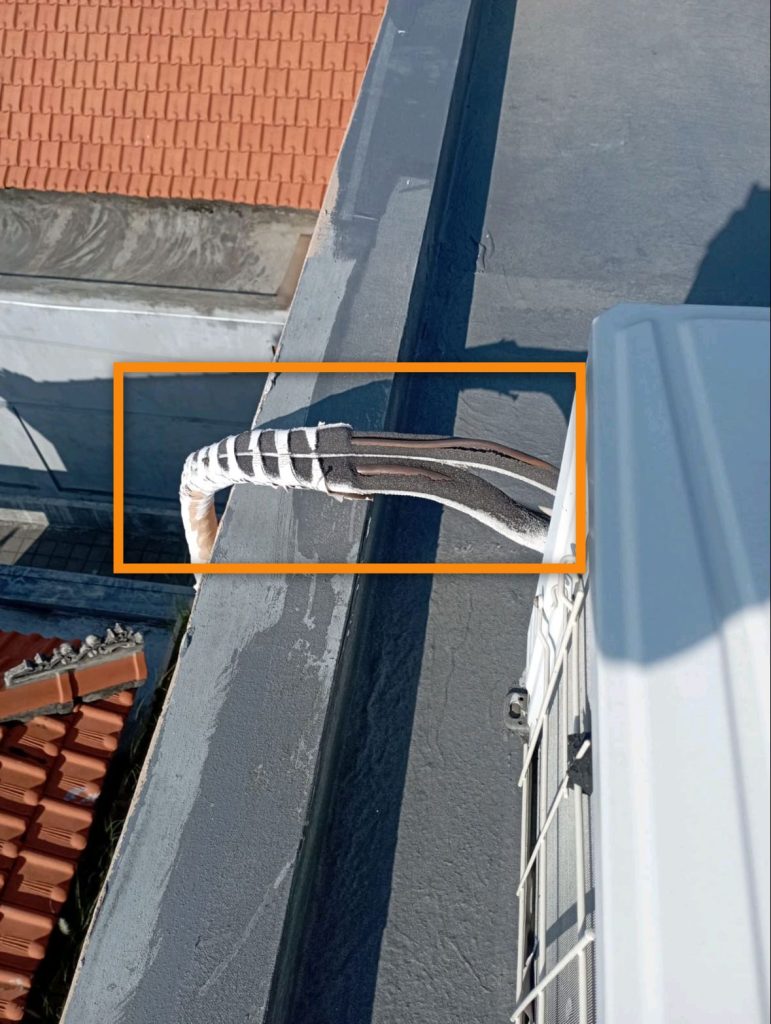
Run each accessible air-conditioning unit and confirm that it produces cool air. Look for water dripping from indoor units, damaged insulation around refrigerant lines, poorly supported outdoor equipment, corrosion and condensate drains that terminate in unsuitable locations.
Bathrooms and kitchens should have workable ventilation. An extractor fan is less useful if it discharges into a ceiling void instead of outdoors. In Bali’s humid climate, inadequate ventilation can contribute to condensation, odours and mold-like growth, especially in enclosed rooms.
If performance is poor, leakage is observed or service history is unknown, consult a qualified AC technician.
10. Do Not Forget the Pool and External Structures
For villas with pools, inspect the visible pool shell, coping, grout, surrounding deck, drains, lights and accessible equipment. Look for damaged finishes, loose tiles, corrosion, leakage, unsafe electrical installations and ponding around the pool edge. The pump room should be accessible, reasonably dry and safely arranged. Underground control rooms need particular attention because rainwater can enter and damage electrical or pumping equipment.
Check gazebos, boundary walls, steps, decks and balconies for movement, decay, corrosion, missing fasteners and unsafe openings.
Physical Inspection Is Only One Part of Due Diligence
A villa inspection evaluates the visible and accessible condition of the property at a particular time. It does not verify title, ownership, zoning, legal access, tax status, lease terms, permits or whether the completed building matches approved documents. Those matters should be handled separately by an independent notary, lawyer and other appropriate professionals. We are checking for condition and functionality.
Request plans, permits, warranties, repair invoices, maintenance records and construction photographs. Confirm which fixtures and furnishings remain. For a new build, inspect before handover and before its defect or warranty period expires.
Arrange an Independent Bali Villa Inspection Before You Buy
Your viewing is valuable, but defects are easily missed when access is limited, services are switched off or the villa has been prepared for sale.
Bali Home Inspector provides independent, visual and non-invasive inspections of accessible structural elements, roofing, electrical systems, plumbing, moisture, drainage, interiors, exteriors, air conditioning, pools and workmanship. We use moisture meters, thermal imaging, electrical testers and drones where appropriate. Our inspectors hold relevant InterNACHI or Indonesian BNSP certifications. We do not accept commissions or referral payments from agents, contractors or repair companies.
Following the inspection, you receive a detailed digital report with photographs, observed defects, maintenance information and recommendations for further specialist evaluation where appropriate. We do not pass or fail the villa and we do not tell you whether to buy it. We give you clearer information so the decision remains yours.
If you are considering a property in Canggu, Uluwatu, Ubud, Sanur, Seminyak or elsewhere, review the areas where we provide inspections or contact Bali Home Inspector for an estimate.
Pingback: 12 Common Problems We Find in Bali Villas -
Pingback: How to Verify a Luxury Villa in Bali | A Guide -