
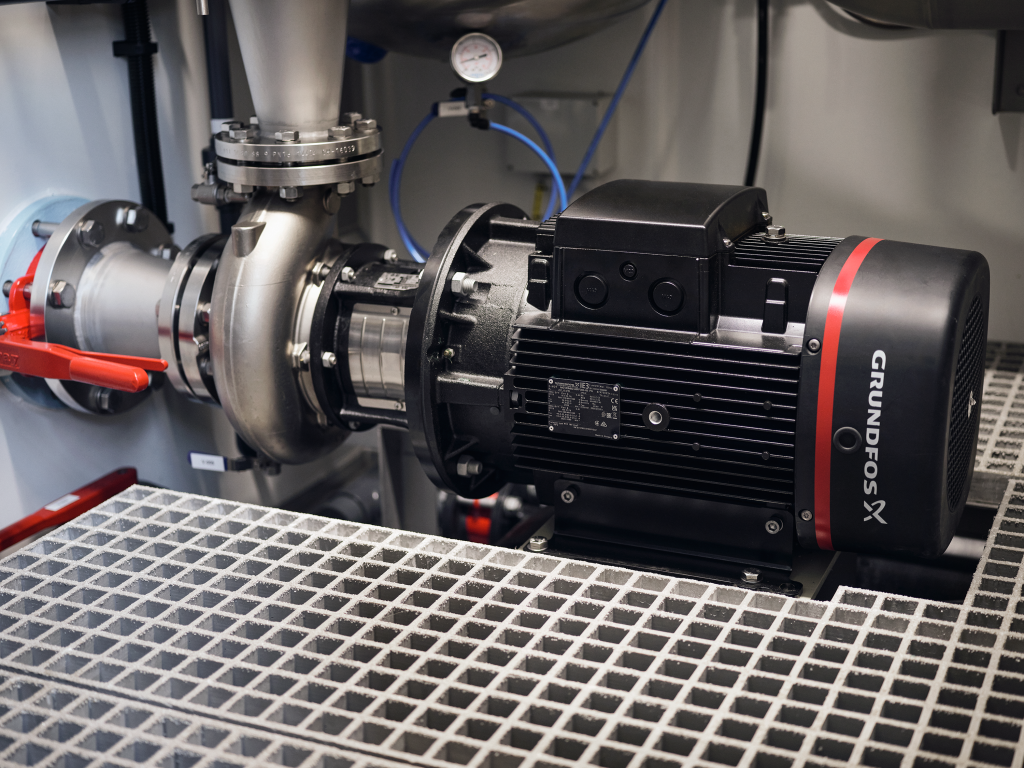
If you’ve ever dealt with weak water pressure, a pump that won’t stop cycling, or a well system that seems to run dry every dry season, you’ve experienced firsthand why pump selection matters so much in Bali. Water systems here rely heavily on pumps to move water from wells, tanks, and municipal lines like PDAM into the home.
This post breaks down the main types of pumps you’ll encounter in Bali villas and homes, what they’re actually for, and which brands tend to show up most often on the island.
Semi-Jet Pumps
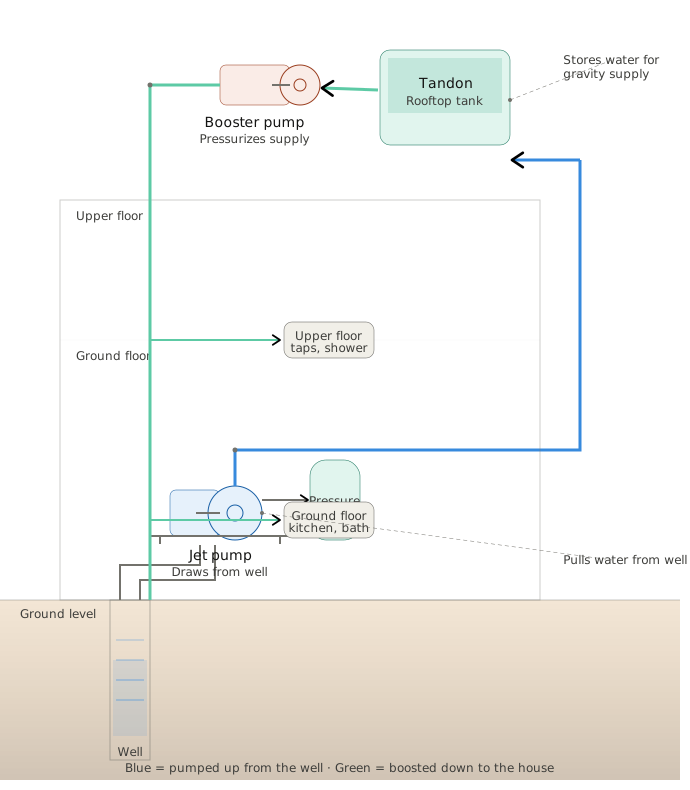
Semi-jet pumps are one of the most common entry-level pumps used in Bali for shallow wells, typically drawing water from depths of up to around 9–11 meters. They use a jet injector system to create stronger suction than a basic shallow-well pump, while still being relatively energy-efficient — many models draw around 100 watts.
Best for: Homes with a shallow well as the primary water source, where the water table isn’t too deep.
Common brands in Bali: Shimizu is by far the most recognized name here — their semi-jet pumps are affordable, widely available, and well-regarded for reliability in typical residential use. Wasser is a common budget-friendly alternative with a similar reputation for straightforward performance. Opinions differ on which brand is most suitable, but as home inspectors we do not have any particular preference. We ensure they are functioning at the time of inspection.
Jet Pumps
Jet pumps step up from semi-jet pumps to handle deeper wells, generally in the 12–50 meter range to pull water up from greater depths. They require more power than a semi-jet unit but can service homes where the groundwater sits further below the surface.
Best for: Homes with deeper wells or bores, or properties where a semi-jet pump isn’t providing enough suction.
Common brands in Bali: Shimizu again shows up frequently at this level, alongside Wasser and Pedrollo — the latter being an Italian brand well regarded for build quality on the more premium end.
Booster Pumps
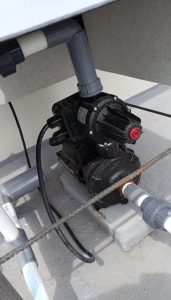
Booster pumps don’t pull water from a source the way jet pumps do — instead, they push water that’s already in a tank or tandon (reservoir) through the home’s plumbing at consistent pressure. This is the pump responsible for the strength (or weakness) of your shower and tap pressure, especially in multi-story villas or homes with several bathrooms running at once.
Booster pumps are generally sized by horsepower, and the right size depends on the number of bathrooms, fixtures, and the vertical distance water needs to travel.
Best for: Most villas — this is the pump maintaining everyday water pressure throughout the home.
Common brands in Bali: Grundfos is the standout name here — a globally respected Danish brand known for durability and efficiency, often chosen for larger villas or properties where reliability is worth the higher price point. Shimizu and Wasser both offer solid, more budget-conscious booster options that are common in mid-range residential builds. Increasingly, inverter/variable-speed booster pumps are available from these brands too, which adjust output to actual demand and can cut electricity use by 30–50% compared to fixed-speed models — worth asking about if you’re building new or replacing an aging unit.
Submersible Pumps
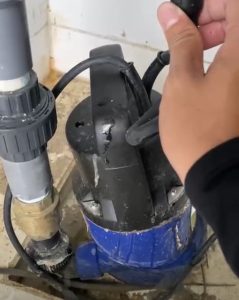
As the name suggests, submersible pumps are designed to sit inside the well or bore itself, pumping water up from below rather than pulling it from ground level. These are typically used for deeper bores where a surface-mounted jet pump isn’t practical, and they tend to be quieter since the motor is underwater. Submersible pumps are also recommended for underground pool control rooms. They can collect water, especially in the rainy season, and submersible pumps (albeit smaller than the ones we mentioned above) can help direct water out of the pool room. Planning early with your builder will help you create an integrated system.
Best for: Deep bore wells, or properties drawing water from a significant depth where surface suction pumps lose efficiency.
Common brands in Bali: Shimizu’s submersible range is widely available and reasonably priced for residential use. Grundfos and Pedrollo also offer submersible options, generally chosen for properties wanting a longer-lasting, lower-maintenance solution.
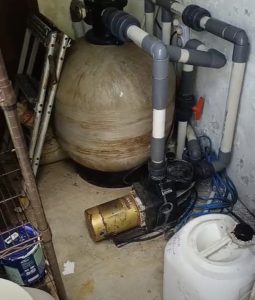
Pool Pumps
Separate from the home’s domestic water system, pool pumps circulate and filter pool water continuously. These run on their own dedicated circuit and are sized according to pool volume and turnover rate rather than household fixture count.
Best for: Any villa with a swimming pool — undersized pool pumps are a common source of cloudy water and algae issues we see during inspections.
Common brands in Bali: This is a category where a wider range of specialist brands show up, and it’s worth confirming compatibility with your specific pool’s filtration setup rather than assuming a generic domestic pump brand will do the job well. Brands such as Hayward, Emaux, and Venezia are often used.
Why the Right Pump Matters — And Why It’s Not a DIY Decision
It’s tempting to think of a pump as a simple, interchangeable part — but undersizing or oversizing a pump for a property’s actual demand is a common mistake. Too small, and you’ll have weak pressure or a pump that’s constantly straining and burning out early. Too large, and you risk pressure surges, premature wear on fixtures, and wasted electricity.
The right pump setup depends on several property-specific factors: the number of bathrooms and fixtures, the building’s height and pipe layout, the water source (well depth, municipal supply, or tank-fed), daily usage patterns, and even the electrical capacity available on-site.
This is exactly why we recommend involving a qualified MEP (Mechanical, Electrical, Plumbing) specialist when building, renovating, or replacing a pump system. An MEP specialist can properly calculate the flow rate and pressure requirements for your specific home, recommend the right pump type and horsepower, and make sure the system is installed correctly — not just guessed at based on what a hardware store happens to have in stock.
If you’re purchasing a property, our inspections include an assessment of the existing pump and water system as part of the overall plumbing evaluation — helping you understand whether the pressure is sufficient, if leaks are present, and if the pump is cycling constantly and perhaps a leak is present.